
Heat Pump Electricity Tariffs in Devon: How to Actually Cut Your Running Costs
Two identical houses in Exeter, two identical 8kW air source heat pumps, installed the same month. One household pays around £780 a year to heat the home and the water. The other pays closer to £1,450. The hardware is the same. The difference is the electricity tariff and how the system is set up to use it. This catches out a lot of people, because the heat pump conversation almost always stops at the installation and the grant, and almost never gets to the bit that determines what you actually pay every month for the next fifteen years. With the Boiler Upgrade Scheme grant at £7,500 and standard variable electricity hovering around 25 - 27p per kWh against gas at roughly 6 - 7p, the tariff is doing more work than the SCOP figure on the datasheet. Here is how to get it right.
Why the Tariff Matters More Than the Efficiency Rating
A heat pump's efficiency is expressed as a SCOP - seasonal coefficient of performance. A well-designed system in a Devon home will typically return a SCOP somewhere between 3.2 and 4.0, meaning it produces 3.2 to 4.0 units of heat for every unit of electricity it consumes. That is genuinely good. It is also only half the equation.
If you buy that electricity at 27p per kWh on a standard variable tariff with a SCOP of 3.5, your effective cost of heat is about 7.7p per kWh. Against mains gas at 6.5p with an 88% efficient boiler, an effective 7.4p, you are marginally worse off. That is the scenario where people conclude heat pumps do not save money, and on those numbers they are right.
Now buy a meaningful chunk of that electricity at 12p or 8p during off-peak hours. The same SCOP of 3.5 gives you an effective heat cost of 2.3 to 3.4p per kWh on the cheap units. Shift 40 - 50% of your annual heat demand into those hours and the blended cost drops to around 5.5 - 6p, comfortably under gas and dramatically under oil or LPG, which most of rural Devon is still burning. If you are weighing up a system and want the running-cost side modelled properly rather than guessed at, Green Home Boilers & Heat Pumps can run the numbers against your actual property and current tariff before you commit to anything.
The One Number to Ask For
When an installer quotes, ask for the estimated annual kWh of electricity the system will consume, not just the SCOP. That single figure, multiplied by your day rate and your off-peak rate, tells you your realistic annual cost in about ten seconds. A 1980s three-bed semi in Exmouth with decent loft insulation typically lands somewhere around 3,500 - 4,500 kWh a year. A large uninsulated cob property near Cullompton can be double that.
The Tariff Types Available to Devon Households
There are broadly four things you can be on, and the differences are large.

Standard variable is the default: one rate all day, currently around 25 - 27p per kWh. It is the worst option for a heat pump household by a distance. If you have a heat pump and you are still on your supplier's standard variable rate, that is usually the single most expensive mistake in the whole system.
Economy 7 is the old night-storage tariff, still widely held across Devon because so many off-gas properties ran storage heaters. You get seven hours of cheap overnight electricity at roughly 12 - 16p, paid for with a higher day rate of 28 - 32p. Whether it helps depends entirely on how much heat you can shift into that window.
Then there are the heat pump specific tariffs. Several suppliers now offer these, giving either a discounted rate on a portion of consumption or a long cheap overnight window. They generally require a smart meter and proof of a heat pump installation.
Last, time-of-use and agile tariffs, priced half-hourly against the wholesale market. These can deliver very cheap or even negative rates on windy nights, which the South West gets plenty of. They also spike hard during winter evening peaks. They reward households with battery storage or genuinely flexible demand, and they punish anyone who heats at 5pm regardless of price.
Which Suits a Devon Property
If you are off the gas grid, which covers a large share of rural Mid and East Devon, the comparison is against oil at roughly 65 - 75p per litre or LPG at around 75 - 90p per litre. Both are well above mains gas in effective pence per kWh, which means almost any heat pump tariff arrangement beats them. The urgency to optimise is lower because the baseline you are replacing is expensive.
If you are on mains gas in Exeter, Plymouth or Exmouth, the optimisation matters far more, because the gas baseline is cheap and the margin is thinner. Ofgem publishes independent energy advice for households covering how tariff types work and what protections apply when you switch.
Making the Heat Pump Actually Use the Cheap Hours
This is the part that gets skipped. Getting a good tariff does nothing if the system heats at the wrong time.
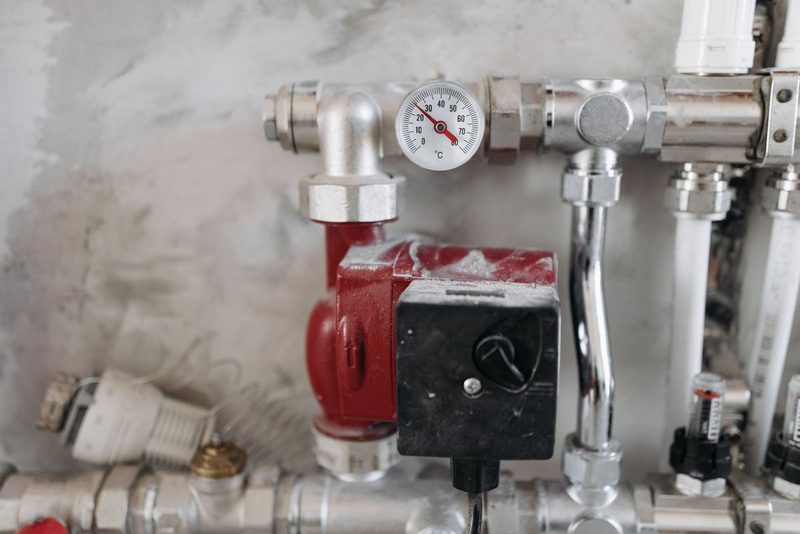
A heat pump paired with a hot water cylinder gives you the easiest win available. Heating the cylinder is a discrete, schedulable block of demand - typically 4 - 8 kWh depending on cylinder size and family. Set it to heat during the off-peak window and you move that entire block onto the cheap rate every single day of the year. On a 200-litre cylinder that is roughly 6 kWh a day, around 2,200 kWh a year, and moving it from 27p to 12p saves about £330 annually on that alone.
Space heating is harder because you cannot store much of it, but you can shift more than people think. Running the system slightly harder overnight and through the early morning off-peak window, letting the house coast through the expensive evening peak, works well in properties with reasonable thermal mass. Devon's cob and solid-stone properties, of which there are a great many across the Culm Valley and up towards Crediton, are unusually good at this - thick walls hold heat for hours.
The Weather Compensation Setting
Ask whether your system has weather compensation enabled, and check it. A heat pump running weather compensation adjusts its flow temperature based on outside air temperature, so on a mild Devon day at 10°C it might run a 32°C flow, and on a rare cold snap at -2°C it runs 45°C. Lower flow temperature is directly, mathematically better efficiency - roughly 2.5% improvement in COP for every 1°C you drop the flow.
A system left on a fixed 50°C flow year-round, which is more common than it should be, is throwing away 15 - 25% of its potential efficiency. That is £150 - £250 a year on a typical Devon home, for a settings change. We covered the underlying maths on this in our comparison of heat pump versus gas boiler running costs in Devon, which is worth reading alongside this if you are still deciding.
Devon's Climate Is Genuinely in Your Favour
This is one of the few times where the local weather is an advantage rather than a complication. Heat pump efficiency falls as outside air temperature drops, and Devon simply does not get very cold.
Coastal and lowland Devon averages a January mean of roughly 5 - 7°C, with air frosts typically numbering 25 - 40 a year at lower elevations, against a UK average closer to 50 - 55. Exmouth, Dawlish and Teignmouth see fewer still. The number of hours a year where a Devon heat pump is working below 0°C is small, which means the system spends the overwhelming majority of the heating season in its efficient operating band. The Met Office's UK climate averages data confirms the South West peninsula as one of the mildest regions in the country.
The trade-off is the length of the season rather than its severity. Devon's heating season runs long - realistically mid-October to late April, around 200 days, with a damp maritime climate that means a lot of low-grade heat demand rather than short intense cold snaps. That profile is close to ideal for a heat pump, which prefers running steadily at low output to cycling hard.
The Exception: Dartmoor Fringe and High Ground
Properties above roughly 200 metres on the Dartmoor and Exmoor fringes are a different proposition. Frost counts double, wind chill on exposed sites affects defrost cycles, and the annual heat demand can be 30 - 40% higher than a sheltered lowland property of the same size. Tariff optimisation matters more there, not less, and so does correct sizing.
Getting the Grant and the Tariff to Work Together
The Boiler Upgrade Scheme provides £7,500 towards an air source heat pump in England, paid to the installer and deducted from your bill. It requires an MCS-certified installer and a valid EPC without outstanding insulation recommendations. Full detail is on Ofgem's Boiler Upgrade Scheme pages and you can check installer credentials through the MCS certification register.
The part worth knowing: the grant conditions have nothing to do with your electricity tariff, and nobody in the grant process will advise you on it. You can complete a fully compliant, fully grant-funded installation and remain on the worst possible tariff for the next five years, and no one will flag it. That responsibility sits entirely with you.
Do it in this order. Get the installation designed and the flow temperatures set as low as the emitters allow. Get a smart meter fitted if you do not have one, because almost every good heat pump tariff requires half-hourly metering. Then, once the system has run for four to six weeks and you can see actual consumption data, switch tariff based on your real usage pattern rather than a projection. Switching before you have data is guessing.
What This Looks Like in Pounds
Take a reasonably typical case: a four-bedroom 1970s detached house near Cullompton, off the gas grid, previously on oil, now with a 9kW air source heat pump and a 250-litre cylinder. Annual heat demand around 16,000 kWh. SCOP of 3.4, so roughly 4,700 kWh of electricity a year.

On standard variable at 26p, that is £1,222 a year. On Economy 7 with 45% of consumption shifted into the cheap window at 14p and the rest at 30p, it is £1,010. On a heat pump tariff with a long overnight window at 11p and 55% of consumption shifted, it comes to around £830. Against the oil it replaced, which was running £1,400 - £1,700 a year at recent prices, all three options save money, but the spread between the best and worst electricity arrangement is nearly £400 annually, or close to £6,000 across the life of the system.
None of that requires new hardware. It requires a tariff switch and a schedule.
Frequently Asked Questions
What is the best electricity tariff for a heat pump in Devon? A dedicated heat pump tariff or a well-used Economy 7, rather than a standard variable rate. The key is having a long cheap overnight window and being able to shift a meaningful share of consumption into it. Most heat pump tariffs need a smart meter and proof of an MCS-registered installation. Switch after four to six weeks of running, once you can see your actual half-hourly usage rather than a projection.

How much can a better tariff save on heat pump running costs? On a typical Devon home consuming around 4,700 kWh a year, the gap between standard variable and a good heat pump tariff is roughly £350 - £400 annually. Across a fifteen-year system life that is close to £6,000, and it requires no change to the hardware at all. Adding scheduled off-peak cylinder heating alone typically saves £300 or more a year.
Does a heat pump work well in Devon's climate? Yes, better than in most of the UK. Coastal and lowland Devon averages a January mean of 5 - 7°C with roughly 25 - 40 air frosts a year, against a UK average nearer 50 - 55. Heat pumps lose efficiency as air temperature drops, so a mild maritime climate keeps the system in its efficient band for most of the season. Properties above about 200 metres on the Dartmoor and Exmoor fringes are the exception and need more careful sizing.
What is weather compensation and why does it matter? It adjusts the heat pump's flow temperature according to the outside air temperature, so the system runs cooler on mild days. Efficiency improves by roughly 2.5% for each 1°C the flow temperature drops. A system stuck on a fixed 50°C flow year-round wastes 15 - 25% of its potential efficiency, which is £150 - £250 a year on a typical Devon property. Check whether yours has it enabled.
Do I need a smart meter for a heat pump tariff? Almost always, yes. Heat pump tariffs and time-of-use tariffs are priced on half-hourly consumption data, which requires a smart meter operating in smart mode. If you have an older SMETS1 meter that has gone dumb after a supplier switch, it may need replacing or re-enrolling before you can access the better rates.
You might also like