
Air Source Heat Pumps in Cullompton and the Culm Valley: Costs, Grants and Off-Gas Homes
Cullompton sits in the Culm Valley with around 4,500 households in the town itself and several thousand more scattered across Uffculme, Willand, Hemyock, Kentisbeare and the surrounding parishes. A significant share of those outlying properties are off the gas grid - across Mid Devon roughly one home in four heats with oil, LPG or electricity rather than mains gas, against about one in seven nationally. That single fact changes the heat pump argument completely. Where a Cullompton town centre house on gas might save little, an oil-heated farmhouse at Hemyock can cut running costs by 25% to 45% and take a £7,500 grant off the installation. Systems here typically cost £9,000 to £16,000 before grant. Here is how it works out.
What an Air Source Heat Pump Costs Around Cullompton
Prices depend on the size of the unit and how much of the existing system has to change.
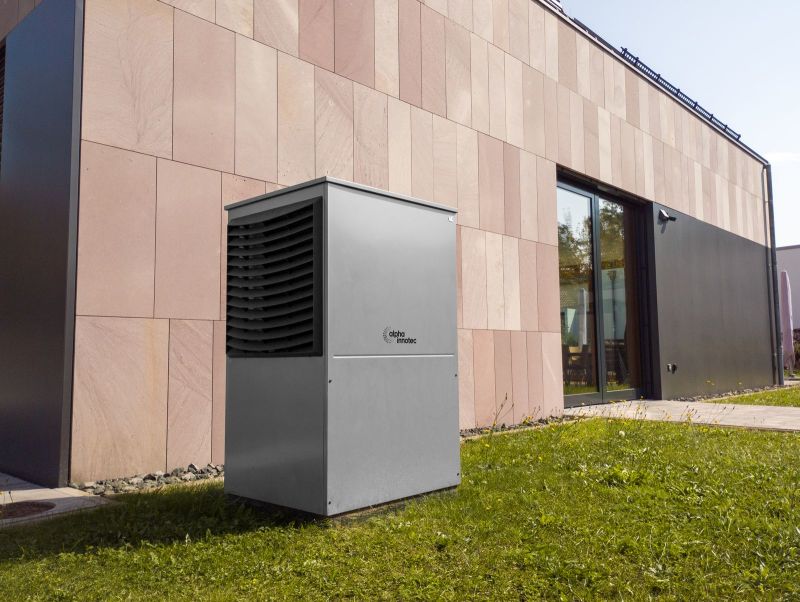
A 6 to 8 kW system in a well-insulated three-bedroom house, reusing most existing radiators with two or three upsized, runs £9,000 to £12,000 before grant. An 11 to 14 kW system in a larger or older property, with a new cylinder and six to ten radiators changed, lands £12,000 to £16,000. A solid-wall Culm Valley cottage or converted barn needing a 16 kW unit, full radiator replacement, a buffer tank and significant pipework changes can reach £17,000 to £24,000.
Take £7,500 off those figures for the Boiler Upgrade Scheme grant, which the installer claims on your behalf and deducts from the invoice. A typical Cullompton three-bed therefore lands somewhere between £2,000 and £5,000 net, which is comparable to a new oil boiler and cylinder. Green Home Boilers and Heat Pumps carries out the survey and handles the grant application as part of the installation.
Why Off-Gas Culm Valley Homes Have the Strongest Case
The running cost comparison is straightforward once you put it in pence per useful kilowatt hour.
Heating oil at 2026 prices sits around 65 to 80 pence per litre, which after boiler efficiency of roughly 85% works out at about 8 to 10 pence per useful kWh. LPG is worse, typically 11 to 14 pence. Direct electric heating is worst at 25 to 28 pence.
A heat pump running at a seasonal performance factor of 3.2 to 3.6 turns a 26 pence electricity unit into about 7.5 to 8 pence per useful kWh on a standard tariff, and closer to 5 to 6 pence on a heat-pump-specific tariff with cheaper overnight rates. Against oil that is a saving of roughly 15% to 30% on a standard tariff and 35% to 50% on a good one. Against LPG the gap is wider still.
Against mains gas at about 6.5 to 7 pence per useful kWh, the heat pump is roughly level or slightly more expensive. That is the honest picture, and it is why the strongest cases around Cullompton are in the villages rather than the town centre estates.
Oil Tank Removal Is a Bonus Nobody Prices In
Getting rid of an oil tank frees up 4 to 8 square metres of garden or yard, removes the need to buy 1,000 litres at a time, and takes away the theft risk that has become a real problem on isolated Devon properties. Decommissioning and removing a domestic oil tank costs £250 to £600, and a bunded tank at end of life would have cost £1,800 to £3,500 to replace anyway.
What the Culm Valley Climate Means for Performance
Mid Devon has a mild maritime climate. Cullompton's design outside temperature for heating calculations is around minus 2 to minus 3 degrees Celsius, and genuinely cold spells are short - the town typically sees fewer than 15 days a year below freezing at midday.
That is close to ideal for air source. Heat pump efficiency falls as outside temperature drops, so a mild winter climate keeps the seasonal average high. A unit that manages an SPF of 2.8 in the Scottish Highlands will often reach 3.4 to 3.7 here on the same specification.
The Culm Valley does have two local quirks worth planning around. Cold air drains down the valley on clear nights, so a unit sited at the bottom of a sloping garden can sit in a frost pocket several degrees colder than the house. And humidity is high, which means more defrost cycles - the unit periodically reverses to clear frost from the outdoor coil, costing a few percent of annual output. Neither is a problem, but siting the unit on the warmer, better-drained side of the property is worth doing deliberately.
Old Devon Buildings: Cob, Stone and Solid Walls
A good number of properties around Uffculme, Hemyock and Kentisbeare are cob or rubble stone, some of them several hundred years old. There is a persistent myth that heat pumps do not work in these buildings. They do, but the design has to respect how the walls behave.
Cob has surprisingly decent thermal mass and poor insulation value - typically a U-value around 1.2 to 1.8 W/m²K against 0.3 for a modern cavity wall. That means high heat loss, so the unit has to be sized properly rather than optimistically. It also means the building responds slowly, which actually suits a heat pump's steady low-temperature output better than an oil boiler's on-off cycling.
The critical rule is breathability. Cob and lime-mortared stone need to move moisture. Internal insulation in impermeable foam board traps moisture in the wall and rots the timber lintels and the base of the cob. Woodfibre or lime-based insulation systems cost more - roughly £70 to £130 per square metre against £35 to £60 for foam - but they are the only safe option in these buildings.
Realistic expectation: a cob cottage will need larger radiators, a flow temperature around 50 to 55 degrees rather than the 40 to 45 achievable in a modern house, and an SPF closer to 2.8 than 3.5. It still beats oil, but the numbers are tighter and anyone promising otherwise has not done the heat loss calculation.
Radiators, Cylinders and What Actually Changes Inside
The most common misconception is that every radiator must be replaced. In practice, in a typical Cullompton house, somewhere between 30% and 70% of radiators are already large enough.
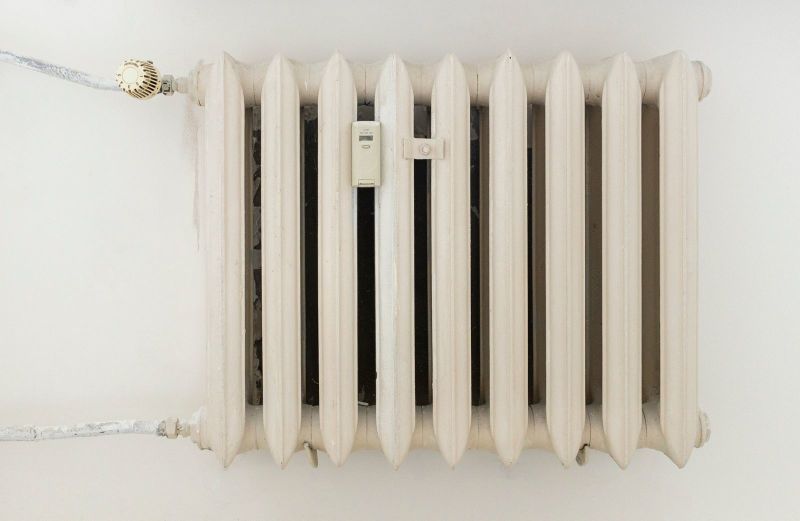
A heat pump runs at a lower flow temperature than a boiler - typically 45 degrees against 70 - so each radiator emits less heat and needs more surface area. Going from single to double panel, or from a K1 to a K2, often solves it without changing the radiator footprint. Replacement radiators cost £120 to £300 each fitted.
The hot water cylinder always changes. Heat pumps need a cylinder with a much larger coil surface area, typically 3 square metres or more, so an existing boiler cylinder will not work. A 210 to 250 litre unvented heat pump cylinder costs £900 to £1,600 fitted, and it will take up more space than what it replaces - usually 600mm diameter and 1.8 metres tall.
Pipework matters too. Microbore, which is common in Devon houses plumbed in the 1970s and 80s, restricts flow badly at heat pump temperatures and often has to be replaced with 22mm and 15mm. Budget £600 to £2,000 if the survey finds microbore throughout.
Planning, Noise and Neighbours in Mid Devon
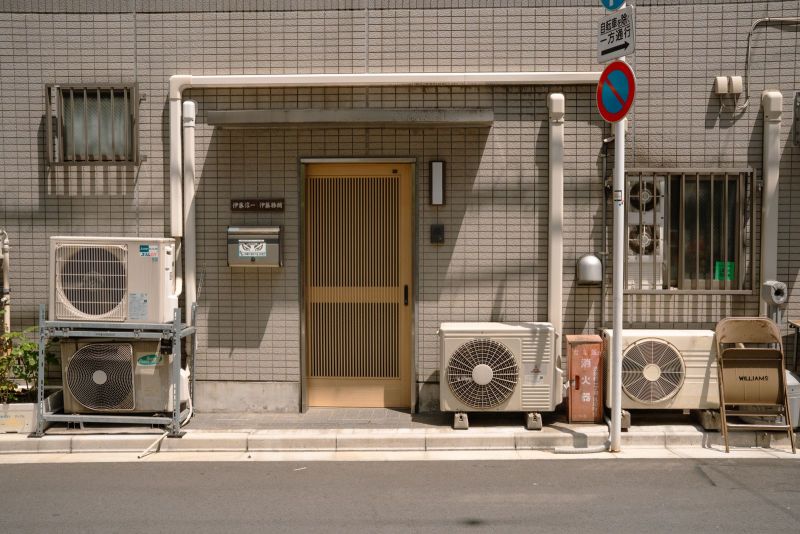
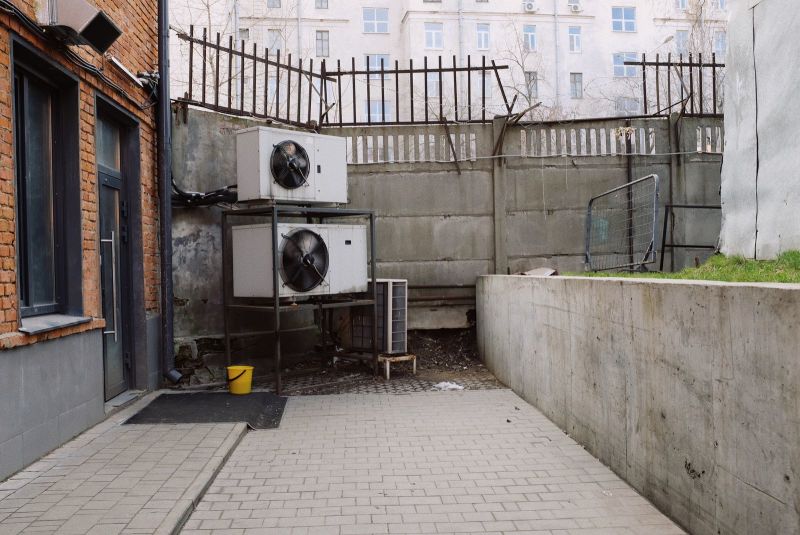
Most domestic air source installations in England are permitted development and need no planning application, provided conditions are met: the unit is at least one metre from the boundary, it is not on a wall facing a highway on a listed building, the volume is under 1.5 cubic metres, and it complies with the MCS 020 noise standard at the nearest neighbouring window.
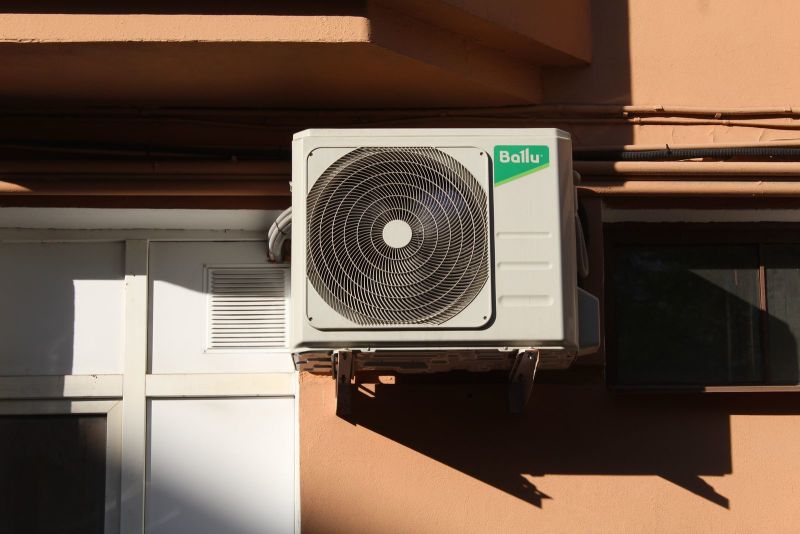
Listed buildings and properties in the Blackdown Hills National Landscape - which covers Hemyock, Clayhidon and the parishes to the east of Cullompton - have tighter rules and often do need consent. Mid Devon District Council handles those applications.
Noise in practice: a modern unit produces 40 to 52 decibels at one metre, which is comparable to a fridge in a quiet room and quieter than most oil boiler flues. The MCS assessment your installer completes calculates the level at the neighbour's window and must come in at 42 decibels or below. Only accredited installers listed on MCS can complete that assessment and claim the grant on your behalf, so accreditation is worth checking before you commit. We cover the same siting and noise questions in more detail in our guide to air source heat pump installation in Crediton.
What the Survey Should Cover Before You Commit
A proper survey takes two to three hours and produces a room-by-room heat loss calculation to BS EN 12831, not a rule-of-thumb sizing off the floor area.
It should record: the construction and insulation of every external wall, loft insulation depth, glazing type and age, the existing radiator sizes and pipework diameter, the cylinder location and available space, the electrical supply and consumer unit capacity, and the proposed unit position with its distance to boundaries and neighbouring windows.
The output you should receive is a written design showing the calculated heat loss in kW, the selected unit and its output at your design temperature, the flow temperature the system will run at, the predicted SPF, and a schedule of which radiators change. If a quote arrives without a heat loss figure on it, it is a guess. Around half of underperforming heat pump installations trace back to sizing done from a doorstep estimate rather than a calculation, and it is the single easiest thing to check before signing.
Frequently Asked Questions
How much does an air source heat pump cost in Cullompton?
A 6 to 8 kW system in a well-insulated three-bedroom house runs £9,000 to £12,000 before grant, and a larger 11 to 14 kW system lands £12,000 to £16,000. Solid-wall cottages and barn conversions needing full radiator replacement can reach £17,000 to £24,000. The £7,500 Boiler Upgrade Scheme grant is deducted from these figures.
Will a heat pump be cheaper to run than oil in the Culm Valley?
Usually yes. Heating oil works out around 8 to 10 pence per useful kWh after boiler losses, while a heat pump at a seasonal performance factor of 3.2 to 3.6 costs about 7.5 to 8 pence on a standard tariff and 5 to 6 pence on a heat pump tariff. That is a saving of roughly 15% to 50% depending on your electricity tariff.
Do heat pumps work in cob and stone Devon cottages?
Yes, but they need careful design. Cob walls have high heat loss, so the unit must be sized from a proper calculation, larger radiators are needed, and the flow temperature will sit around 50 to 55 degrees rather than 45. Any insulation added must be breathable, such as woodfibre or lime, since foam boards trap moisture and rot the structure.
Do I need planning permission for a heat pump near Cullompton?
Most installations are permitted development if the unit sits at least one metre from the boundary, is under 1.5 cubic metres, and meets the MCS 020 noise limit at the nearest neighbouring window. Listed buildings and properties within the Blackdown Hills National Landscape have tighter rules and often do need consent from Mid Devon District Council.
You might also like