
Choosing a Heat Pump Installer in Devon: What MCS Actually Guarantees and the Questions That Matter
The £7,500 Boiler Upgrade Scheme grant has one hard condition: the installer must be MCS certified. That single rule has done something odd to the Devon market. It has pulled in firms who got certified for the grant rather than for the engineering, and it has convinced a lot of homeowners that MCS on a letterhead is a quality guarantee. It is not. MCS is a standards and certification scheme covering process and paperwork, and a certified installer can still hand you an undersized unit on oversized bills. Devon has around 60,000 homes off the mains gas grid, roughly double the national proportion, so more households here face this decision than almost anywhere in England. Here is what the certification actually covers, and what you have to check yourself.
What MCS Certification Really Covers
MCS certifies the company, not the individual on your driveway. To hold it, a firm has to work to the installation standards, carry out a room-by-room heat loss calculation to BS EN 12831, issue a performance estimate, register every installation on the MCS database, and operate a complaints process under a consumer code.

That is genuinely useful. It means the design work must exist on paper, it means the system gets registered so it can be traced, and it means there is somewhere to go if things go wrong.
What it does not do is check whether the design is any good. Nobody from MCS visits your house before the install. The heat loss calculation is done by the installer, checked by the installer, and audited only on a sample basis afterwards. If you would like a straight answer on what your property actually needs before you start collecting quotes, you can arrange a survey through the Green Home Boilers and Heat Pumps website.
Why This Matters More in Devon Than Most Places
Two things make Devon harder than average for heat pump design.
The first is the building stock. Cob, solid stone, and rubble-filled walls are common across mid and east Devon, and they behave nothing like a cavity-walled 1990s estate house. Cob has real thermal mass, which means it responds slowly and rewards continuous low-temperature heating, exactly what a heat pump does well. But you cannot model it with the default U-values in the software, and an installer who does will get the heat loss badly wrong in one direction or the other.
The second is the mildness. Exeter's average January minimum sits around 2.5°C and hard frosts are uncommon. That is close to ideal for an air source heat pump, because coefficient of performance falls as outside temperature drops. A well-designed system in Devon should be achieving a seasonal COP in the region of 3.2 to 3.8, meaningfully better than the same kit in the Pennines. If a Devon quote is modelling on a design temperature of -3°C when the local figure is closer to -1.5°C, the unit gets oversized and you pay for capacity you never use.
The Heat Loss Calculation Is the Whole Job
Ask for it. Not a summary, the actual room-by-room calculation with the U-values used, the design flow temperature, and the emitter output for every room.
Three things to look for once you have it:
The design flow temperature should be 45°C or lower for a well-designed system, and ideally 40°C. Anything modelled at 55°C is an installer quietly avoiding the radiator upgrades, and it will cost you 15 to 20% in running efficiency for the life of the system.
The room-by-room emitter outputs should be calculated at the design flow temperature, not at the 75°C your old boiler ran. A radiator putting out 1,400W at 75°C puts out roughly 600W at 45°C. If the calculation quietly uses the boiler figure, half your rooms will be cold in February.
The wall U-values should reflect what your walls actually are. Solid cob at 600mm is not the same as brick, and a default figure of 2.1 W/m²K applied to a Devon cob cottage is a lazy assumption rather than a measurement.
What a good system should cost here
A 3-bedroom Devon home typically lands at £9,000 to £14,000 before the grant for an air source system including a cylinder and some radiator upgrades, so £1,500 to £6,500 after the £7,500 is applied. Our 2026 price guide to air source heat pump costs in Exeter breaks down where the money goes on a typical job.
The Grant Paperwork: Who Does What
The Boiler Upgrade Scheme grant is claimed by the installer, not by you. It is taken off your quote and the installer recovers it from Ofgem afterwards. That is worth understanding, because it means the installer is carrying the risk and the admin.

The government's Boiler Upgrade Scheme guidance sets out eligibility: an England or Wales property, a valid EPC without outstanding loft or cavity wall insulation recommendations, and replacement of a fossil fuel system. Ofgem administers the scheme and publishes the current voucher values.
The EPC condition catches Devon homeowners regularly. A cob cottage with no cavity to fill is usually fine. A 1970s bungalow in Cullompton with a loft insulation recommendation on the EPC has to deal with that first, and lodging an updated EPC takes a few weeks.
Ten Questions Worth Asking Before You Sign
- What design outside temperature are you using, and why that figure for this postcode?
- What design flow temperature is the system sized at?
- Can I see the room-by-room heat loss with the emitter outputs at that flow temperature?
- Which radiators are you changing, and what is the cost if more turn out to be needed?
- What SCOP are you estimating, and what would that mean in pence per kWh of heat?
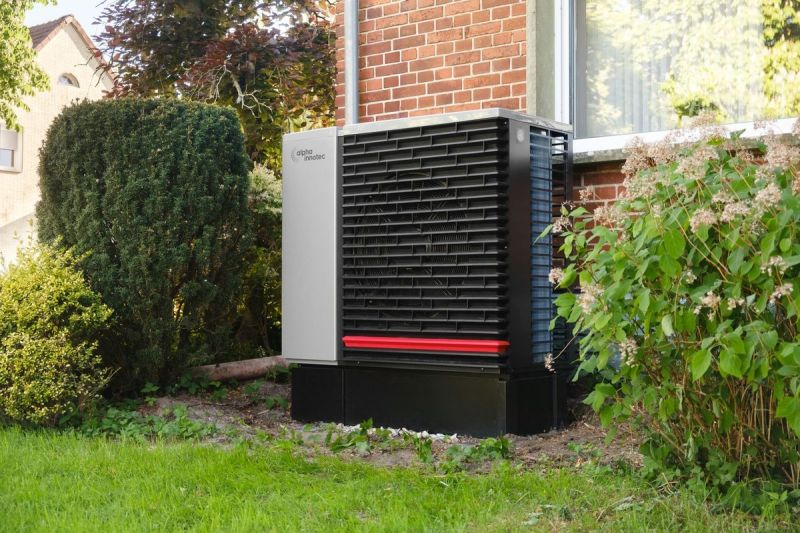
- Where exactly is the outdoor unit going, and what is the sound power level at 1 metre?
- Who commissions it, and do I get the commissioning sheet?
- What is the warranty on the unit, the cylinder, and your workmanship separately?
- Are you registered with a consumer code, and is there an insurance-backed guarantee?
- What is your annual service cost and what does it include?
The answers matter less than the willingness to answer. An installer who has done the design work will talk about it happily. One who gets vague about flow temperatures has not done it.
Noise and siting, the Devon version
Planning rules changed to allow larger units and removed the old 1-metre boundary restriction in England, but the MCS 020 noise assessment still applies for permitted development. In practice, terraced streets in Exeter and Exmouth are where this bites, and a unit sited under a neighbour's bedroom window is a dispute waiting to happen regardless of what the paperwork permits. In Dartmoor and Exmoor National Parks, and in the many conservation areas across Devon's market towns, permitted development rights are tighter and it is worth a call to the planning department first.
Warranties: Three Separate Things
People hear "10 year warranty" and assume it covers everything. It almost never does.
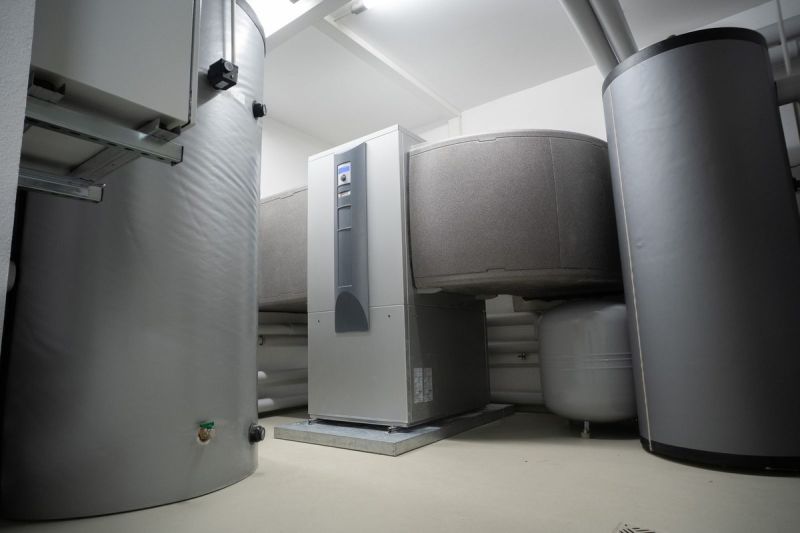
The manufacturer covers the heat pump, typically 5 to 7 years as standard and up to 10 if it is installed by an accredited partner and serviced annually. Miss a service and it can lapse.
The cylinder is a separate warranty from a separate manufacturer, usually 2 to 25 years depending on whether it is stainless or glass-lined.
Workmanship is the installer's own, commonly 12 to 24 months, and it is the one that fails when a firm stops trading. An insurance-backed guarantee through a body such as TrustMark is the only version that survives that.
Check what the annual service costs before you commit. Devon rates run £120 to £220, and it is the condition on most extended manufacturer warranties.
Frequently Asked Questions
Does MCS certification mean a heat pump installer is good?
It means the firm works to defined standards, produces a documented heat loss calculation, registers the installation, and operates under a consumer code. It does not mean anyone independently checked the design of your system before installation. Treat MCS as the minimum entry requirement rather than a quality verdict.

Do I have to use an MCS installer to get the £7,500 grant in Devon?
Yes. The Boiler Upgrade Scheme requires an MCS certified installer, who claims the grant on your behalf and deducts it from your quote. Your property also needs a valid EPC with no outstanding loft or cavity wall insulation recommendations.
What design flow temperature should a Devon heat pump be sized at?
45°C or lower, and 40°C is better. Devon's mild winters, with Exeter averaging around 2.5°C for January minimums, make low flow temperatures easier to achieve here than in colder parts of the country. A system designed at 55°C usually means the installer avoided upgrading radiators, and it costs 15 to 20% in efficiency permanently.
Will a heat pump work in a Devon cob or solid stone cottage?
Usually yes, and often better than people expect, because cob's thermal mass suits continuous low-temperature heating. The catch is the heat loss calculation. Default software U-values do not describe a 600mm cob wall accurately, so insist on figures that reflect the actual construction rather than a generic solid-wall assumption.
You might also like